
Solutions · Gyms and studios
The bucket leaks. The question is how fast.
Sign-ups feel like progress and cancellations happen quietly. Put them side by side against targets and the real trend stops being a surprise.
The pack
What we set up on day one.
Each of these arrives with a target and a direction already set, so the board is useful before you have configured anything.
Against a target, not against last month.
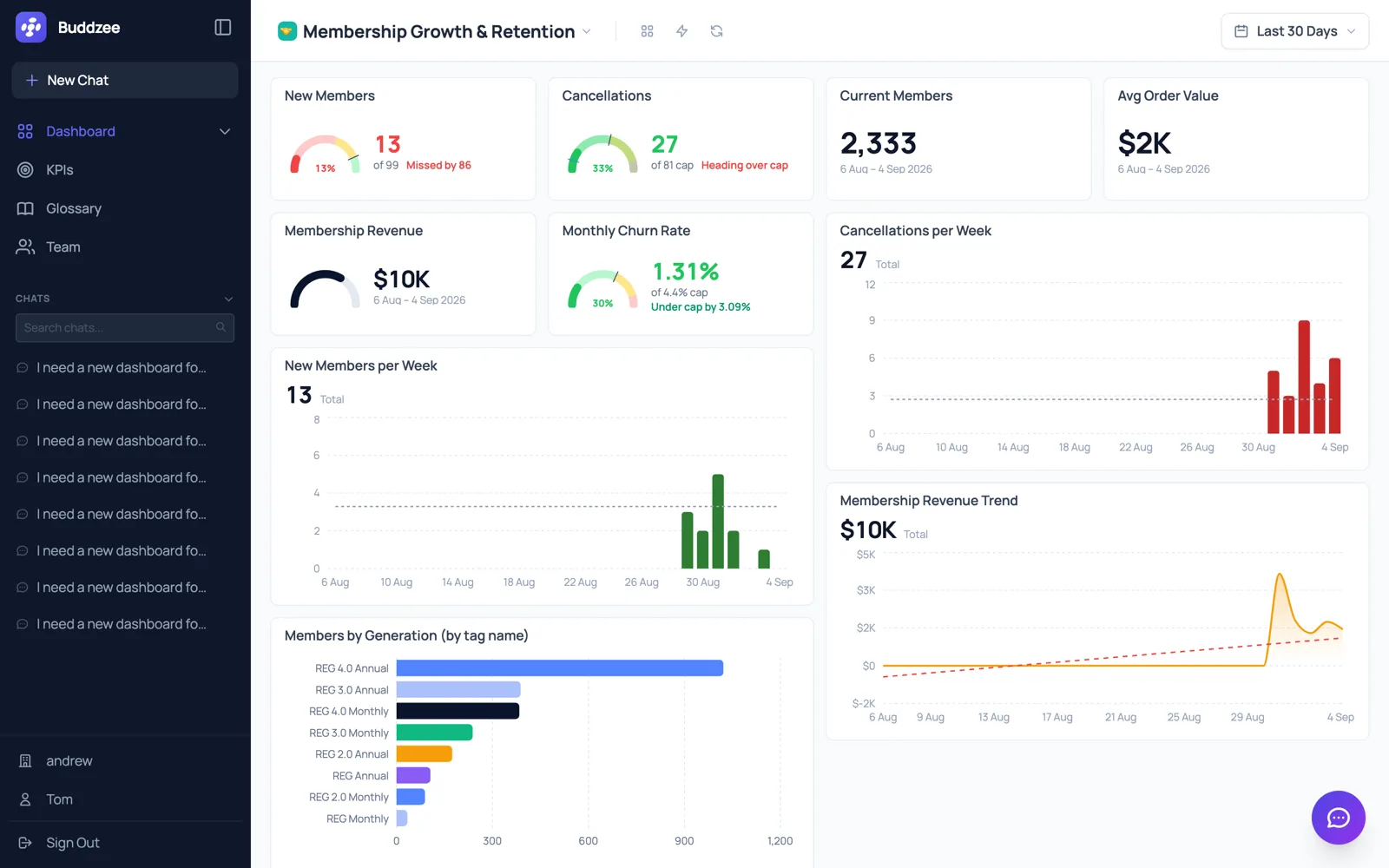
A monthly target with a floor. Thirteen of ninety-nine reads as “missed by 86”, which is a very different sentence to “13 new members”.
A formula KPI: cancellations ÷ members.
Set as a ceiling, because down is good. Under the cap is green — the opposite reading to a sales metric, and Buddzee knows the difference.
The leak, counted and capped.
A cap rather than a target. Heading over it colours before the month closes.
What the members are actually worth.
Split monthly against annual, so a good month of annual pre-pays does not read as sustainable recurring growth.
In practice
Growth and retention on one board.
This is a real Buddzee board from a gym account: new members and cancellations against their targets, churn as a formula KPI under its cap, and the revenue split behind them.
- Churn as a true ratio, not a count
- Caps colour correctly because down is good
- Weekly trend behind every headline tile
Questions
For this kind of business.
How is churn calculated?
Cancellations divided by members over the period, as a formula KPI referencing both by name. You can see and change the definition; it is not hidden in our code.
We run classes rather than memberships.
Then attendance and pack utilisation are your equivalents. The pack is a starting point — the analyst builds from whatever your data holds.
Can staff see the board without seeing revenue?
Yes. Share the board and scope the person, or give them a board of their own with only the numbers they should have.
See your churn against a cap.
Bring last month’s numbers. We will have the growth-and-retention board up before the call ends.