
KPIs and goals
Set the target. See red before it is too late.
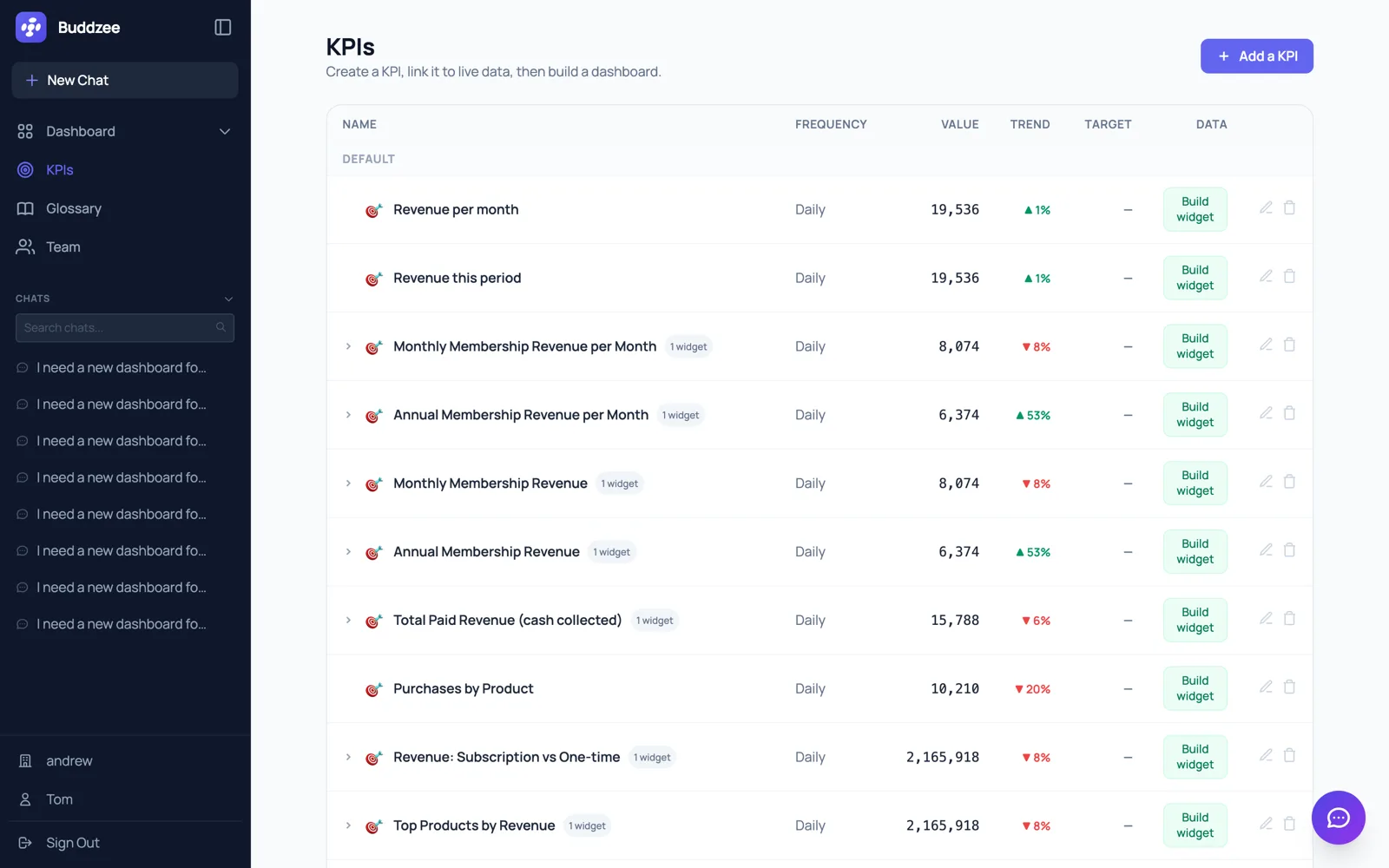
A KPI in Buddzee is not just a number on a chart. It carries what good looks like, which direction is good, and the thresholds where it stops being fine.
Targets
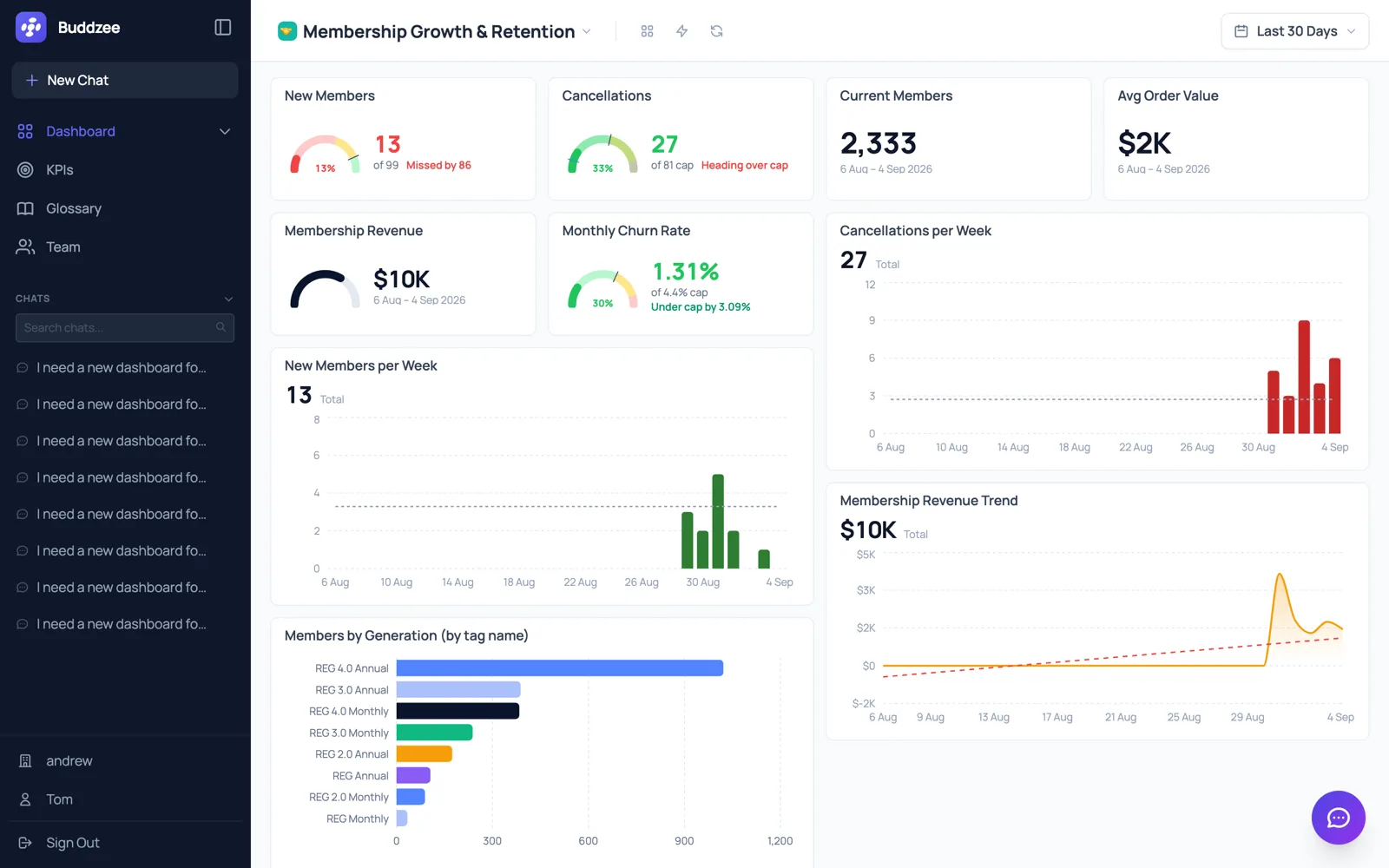
A gauge that reads 13 of 99 tells you the month is gone.
Set a target per period and the gauge fills against it. You see the shortfall in the number itself — “missed by 86” — rather than working it out from a line that happens to look low.
- Targets per period, with the working week respected
- Seasonality, so December is judged against December
- Hierarchy roll-up: a parent target sums its children
Direction
Down is not always bad.
Most tools assume bigger is better and quietly mislead you on every cost, cancellation and churn metric. Buddzee asks which way is good and colours accordingly.
Revenue, bookings, new members.
Green when at or above target. A floor: falling short is the failure.
Churn, cancellations, cost.
Green when at or below the cap. A ceiling: going over is the failure — the opposite reading.
Context, not judgement.
A KPI without a target stays neutral. Buddzee will not invent a threshold and colour a number against it.
Formula KPIs
The numbers that matter are usually ratios.
Churn is cancellations divided by members. Average order value is revenue divided by orders. Build a KPI from other KPIs by name, and it charts and colours like any other — per bucket over time, or across the whole period.
- Reference operands by name, not by database field
- Charts per bucket or as a single period figure
- Cycle-guarded, so a formula cannot reference itself
Questions
About KPIs.
Where does the value come from?
A live query against your connected source, anchored to a date field so the dashboard period actually filters it. Change the period and every KPI recalculates.
Can I enter numbers by hand?
Yes, for the things no system holds — a stocktake figure or a goal set in a meeting. They live alongside queried KPIs.
What if two people disagree on what a metric means?
That is what the glossary is for. Define the term once, with its logic, and both the boards and the analyst use your definition.
Put a target on it.
We will set up your first five KPIs with you, with targets that reflect how your business actually runs.